
The Risks of Artificial Intelligence (AI) in the Legal Sector
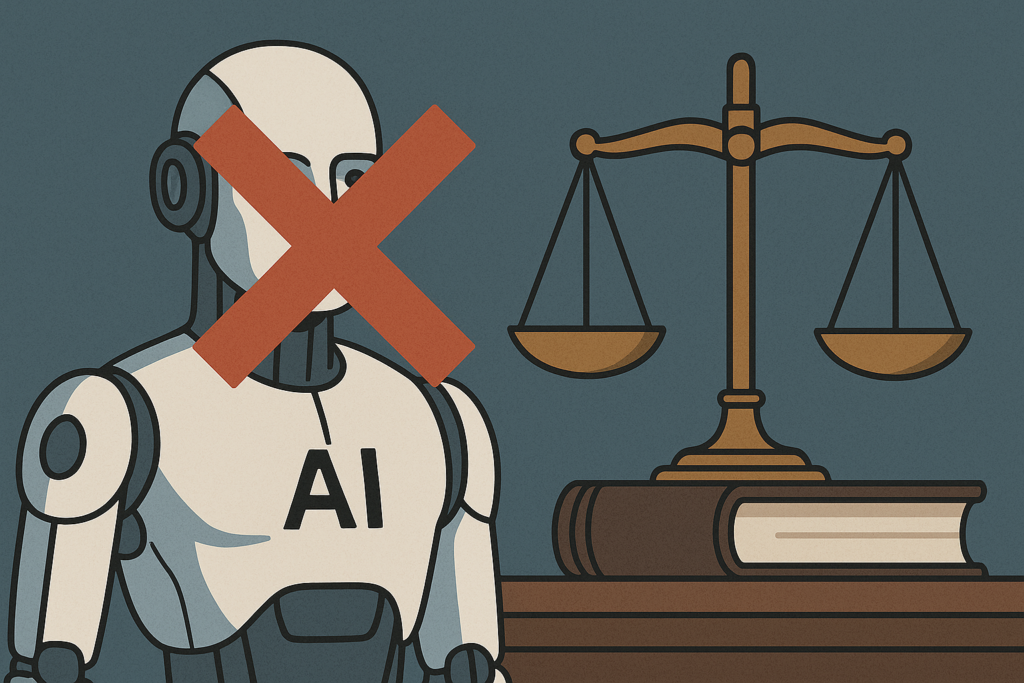
The rapid development of artificial intelligence (AI) has inevitably affected the legal field. While AI offers substantial advantages—such as accelerating legal research, analyzing large volumes of data, and automating repetitive tasks—its unchecked use may pose serious risks to legal certainty, ethics, and the quality of justice.
1. Undermining Professional Responsibility
Automated legal advice generated by AI lacks the responsibility and ethical standards that govern licensed legal professionals. This can lead to inaccurate or misleading legal assessments, for which no one can be held accountable.
2. Lack of Transparency (The Black Box Problem)
Many AI algorithms operate as “black boxes”—their internal logic is neither transparent nor easily understood. This creates significant challenges when attempting to assess the legal validity of a conclusion or recommendation produced by AI.
3. Risks to Data Privacy
Using AI systems to analyze legal data may result in privacy violations, particularly if such systems do not comply with GDPR or are handled without proper oversight and data protection safeguards.
4. Reinforcement of Bias
AI algorithms are trained on historical data, which may contain inherent biases. This can result in the reproduction or even amplification of inequalities, especially in sensitive areas of law and judicial decision-making.
5. Erosion of the Lawyer’s Role
The widespread use of AI in legal consulting—and even in more advanced stages of legal proceedings—may lead to the devaluation of the lawyer’s role, which could negatively impact the quality and human element of legal practice.
As legal professionals, we must critically assess the role of technology, advocate for its proper integration, and uphold the fundamental rights and ethical standards that define our profession.
 English
  Greek
Greek